Teak has an excellent reputation, and weak specifications can hide behind the species name. A useful assessment covers the board, its intended use, and the climate where the finished piece will live.
Wood keeps responding after the workshop
Wood is hygroscopic. It exchanges moisture with surrounding air until it approaches equilibrium moisture content. As moisture changes, dimensions change, mostly across the grain. USDA guidance is direct: correct drying, handling, and storage reduce later movement, and design must account for the movement that remains.
A moisture reading is therefore part of a larger decision. We consider the workshop condition, the destination climate, whether the final room is continuously conditioned, the width of solid sections, and how the joint allows or restrains movement.
Heartwood, sapwood, and the limits of a species name
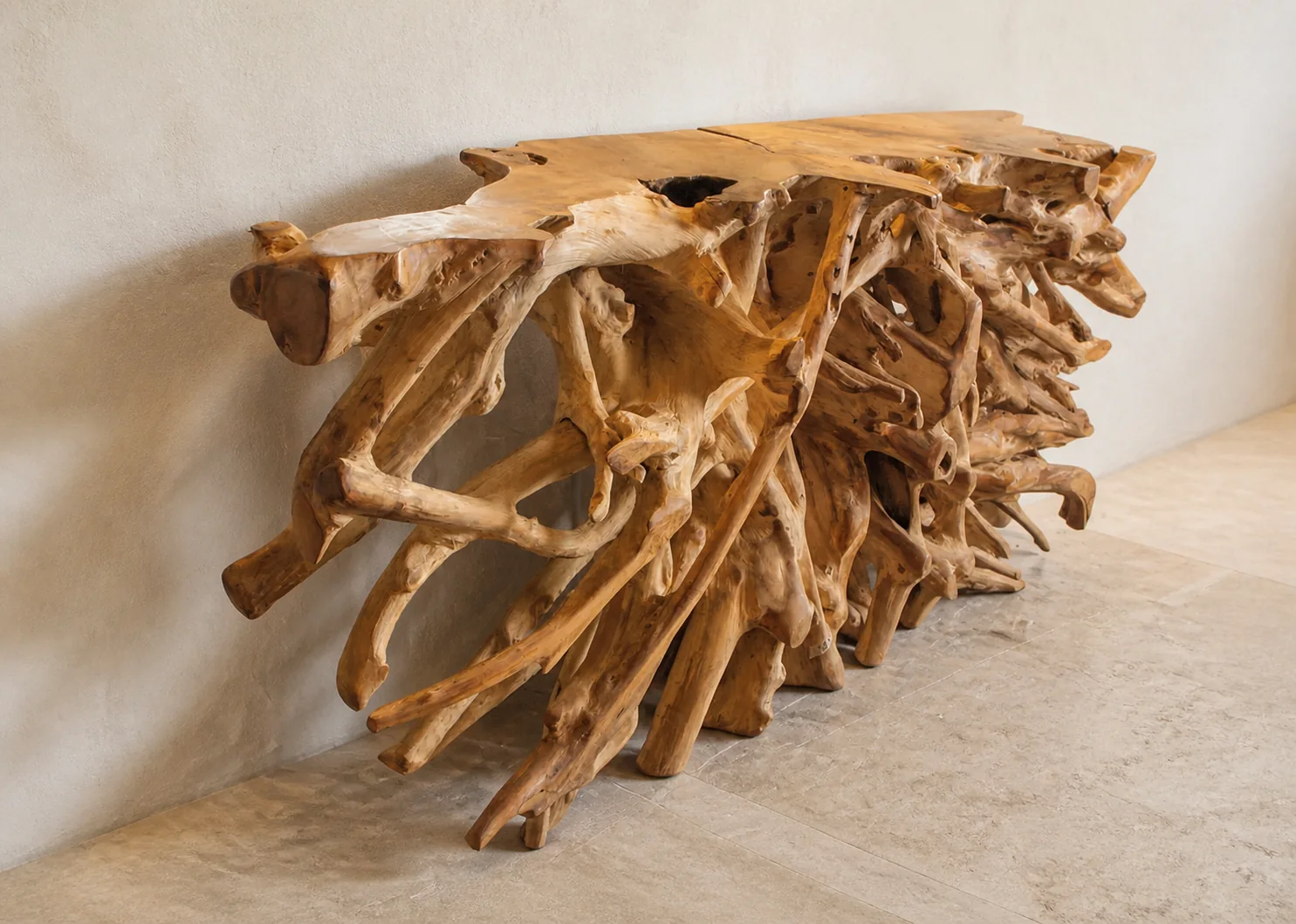
Teak heartwood is recognized for dimensional stability and natural durability. Those properties are associated in part with extractives deposited as heartwood forms. Faster plantation growth, tree age, site, and the proportion of sapwood can influence the material available from one log. Plantation teak performs well when grade, intended use, and detailing are explicit.
- Exterior exposure: prioritize appropriate heartwood, drainage, end-grain protection, and joints that shed water.
- Wide interior surfaces: control moisture, select compatible boards, and allow cross-grain movement in the fixing strategy.
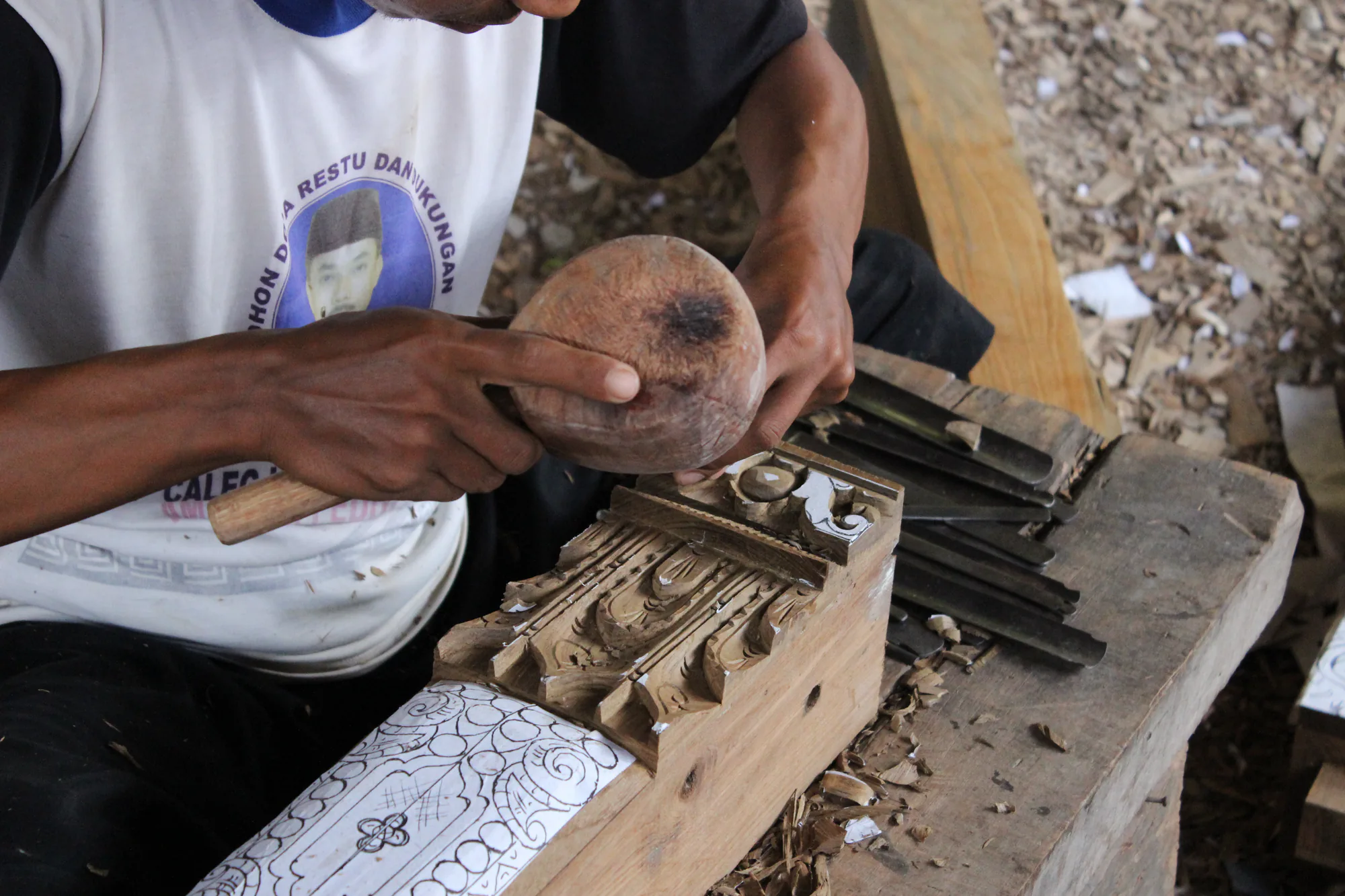
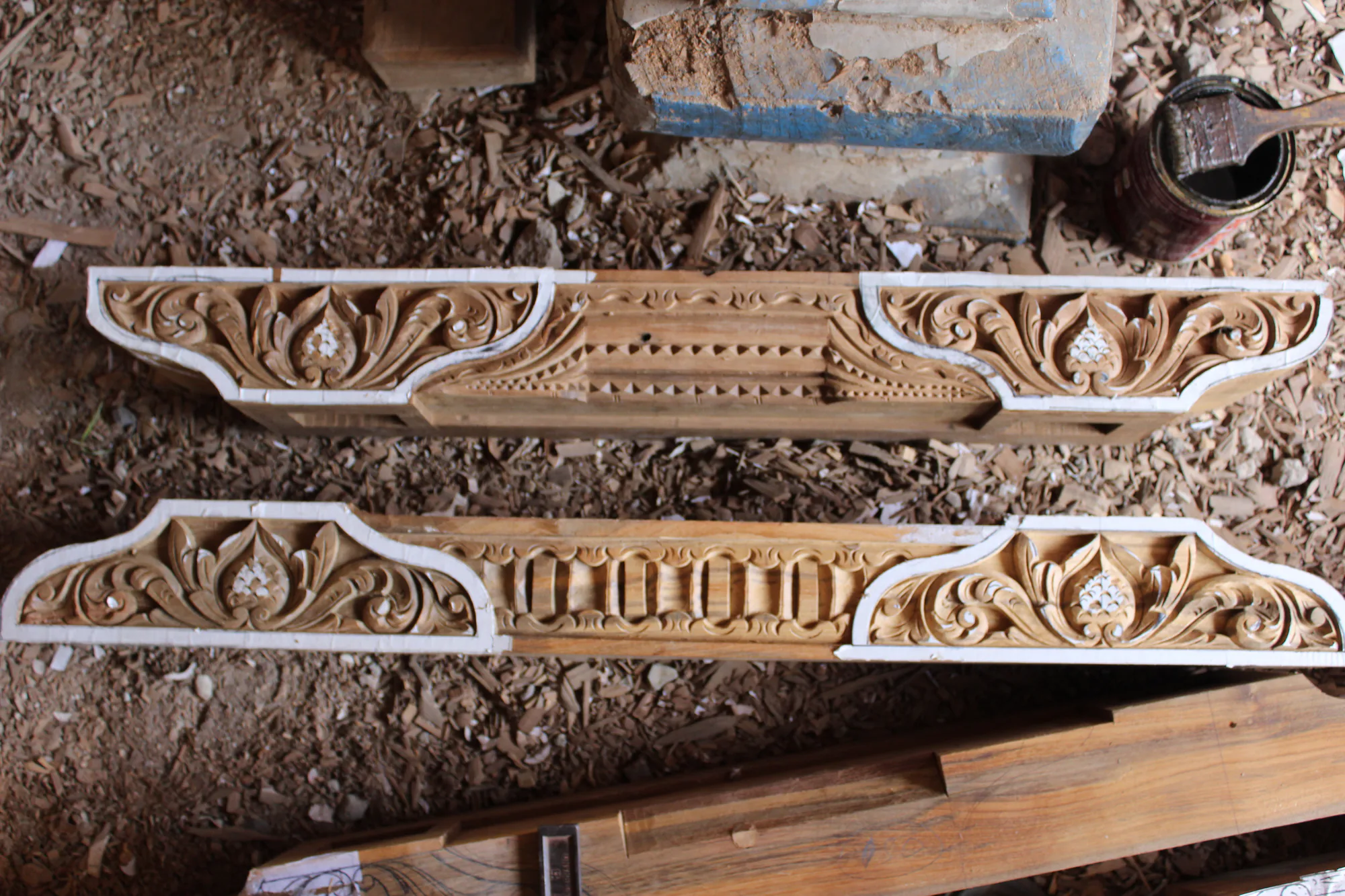
- Fine carving: inspect grain direction, defects, and section depth before committing the pattern.
- Doors and windows: coordinate timber movement with panel construction, hardware tolerances, seals, and the destination climate.
Construction comes first
Oil, wax, lacquer, and exterior coating change appearance, cleaning, and the rate of moisture exchange. Long-term performance begins with dry stock, intelligent grain selection, balanced finishing, protected end grain, and joints that anticipate service conditions.
A serious timber specification describes where the piece will live, how it will be used, and how it is allowed to move.
For clients, the practical request is simple: ask to see the material logic alongside the visual proposal. The answer should connect species, grade, moisture, construction, finish, maintenance, and destination. That is how a beautiful sample becomes a durable object.