A bespoke piece can resolve an unusual room, a repeated daily action, a specific body, a material already present, or a story that should remain personal.
Start with life and use
Reference images are useful for discussing proportion, atmosphere, and finish. They are weak substitutes for observation. We need to know who uses the object, what happens immediately before and after, what must be stored, how people approach it, and what failure would feel like.
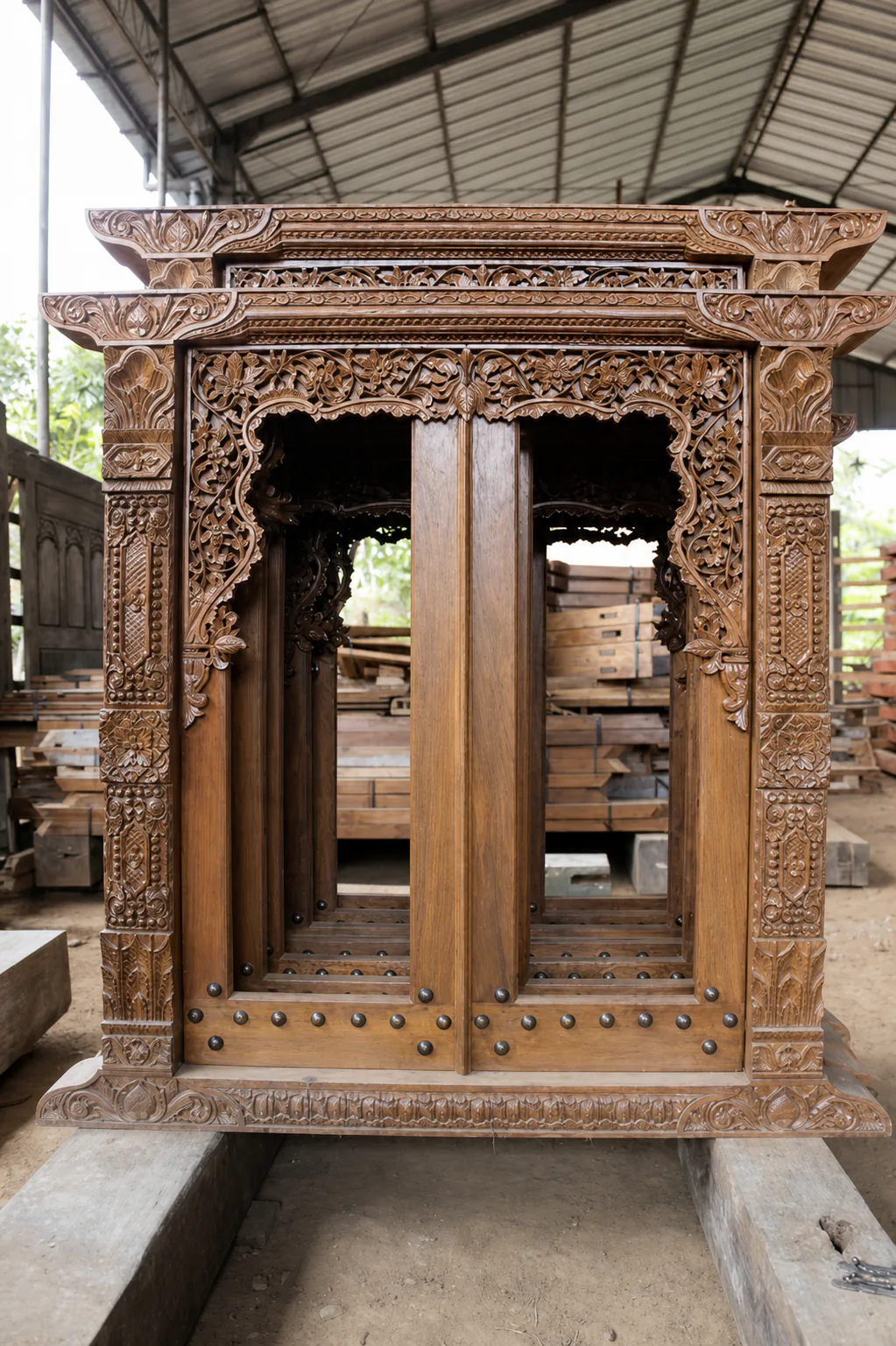
For a dining table, that path includes chair clearance, serving patterns, sightlines, room circulation, surface maintenance, and the number of people on ordinary days versus gatherings. For a carved door, it includes threshold width, privacy, hardware, weather exposure, installation tolerance, and the meaning carried by the composition.
A four-stage path into production
- Define: document the room, user, use sequence, measurements, constraints, budget, and intended lifespan.
- Resolve: test proportion, ergonomics, material sections, joints, hardware, carving depth, and finish samples.
- Prototype: mock up the uncertain part at the cheapest useful fidelity. Test a critical joint, handle, or full-scale section according to the risk involved.
- Record: issue drawings and workshop references that make design intent inspectable during production and final quality control.
Craft needs boundaries to stay precise
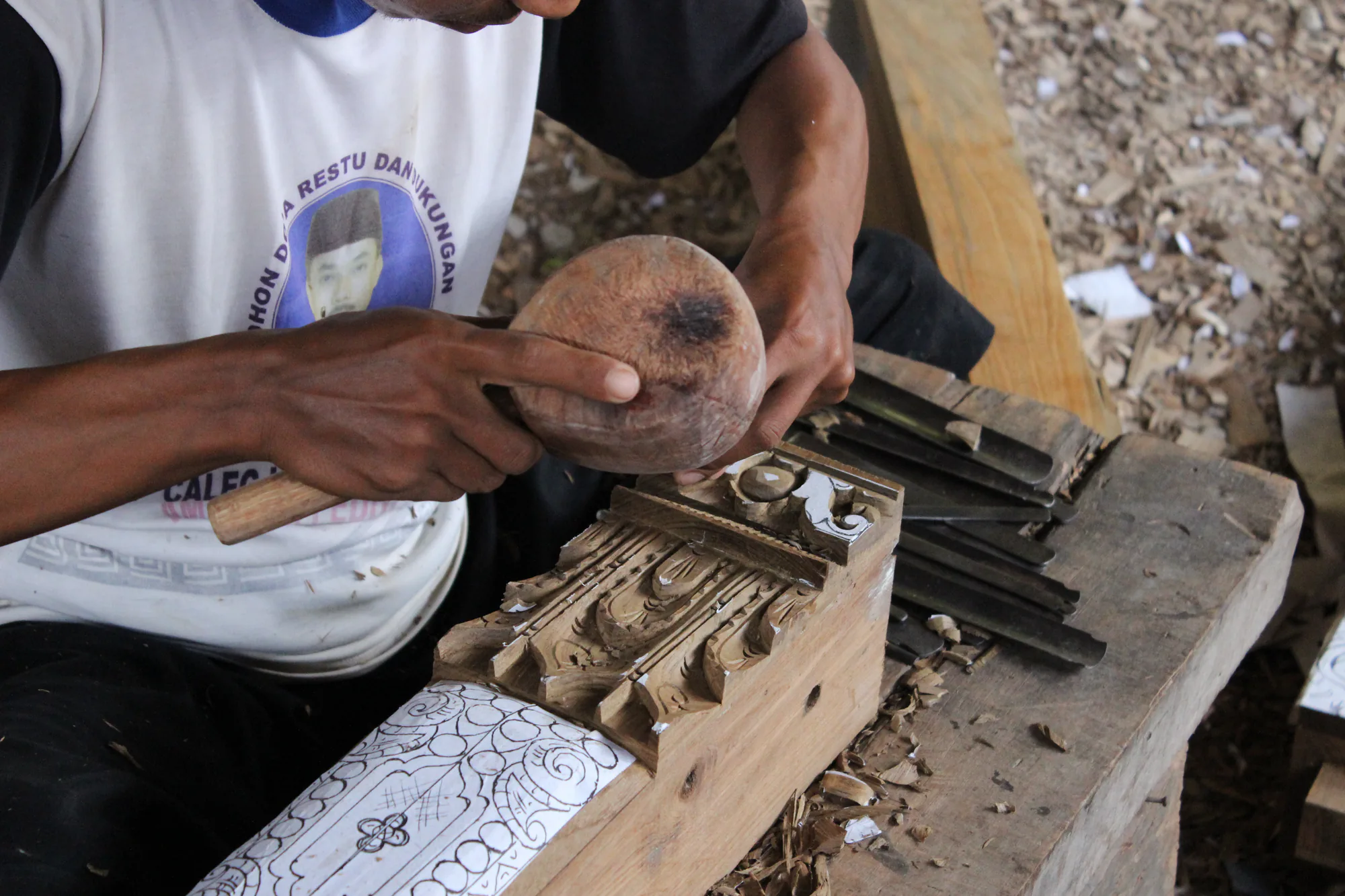
Precise handwork depends on clear fixed points and clear areas of discretion. Overall dimensions, interfaces, safety, and assembly sequence are controlled. Grain selection, subtle carving transitions, and the response to an unusual piece of timber benefit from experienced judgment.
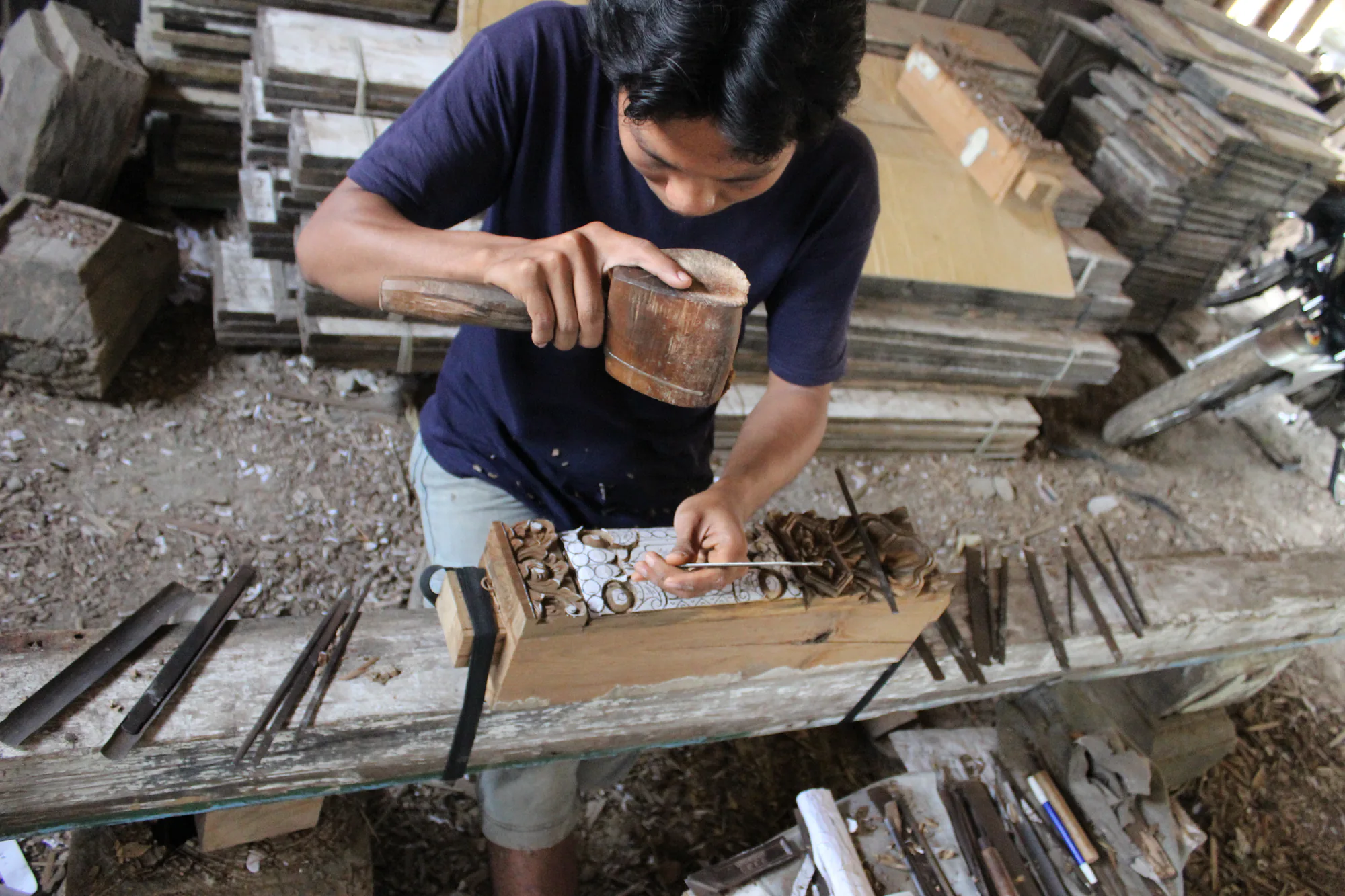
Documentation protects the idea and gives material intelligence a clear place in the process.
Regular photo and measurement checkpoints are especially important for remote clients. They create moments to verify scale, pattern, joinery, and finish before the next operation becomes expensive to reverse.
What a client should prepare
Bring room dimensions, access constraints, photos of surrounding materials, the people and actions the piece must support, desired timing, and a realistic budget range. Include references, then explain what you value in each one. This gives the design team evidence for every decision.